Archive for January, 2012

January 21, 2012

This Crazy Thing Called Palestine

Aysar from Dheisheh Refugee Camp

Aysar from Dheisheh Refugee Camp

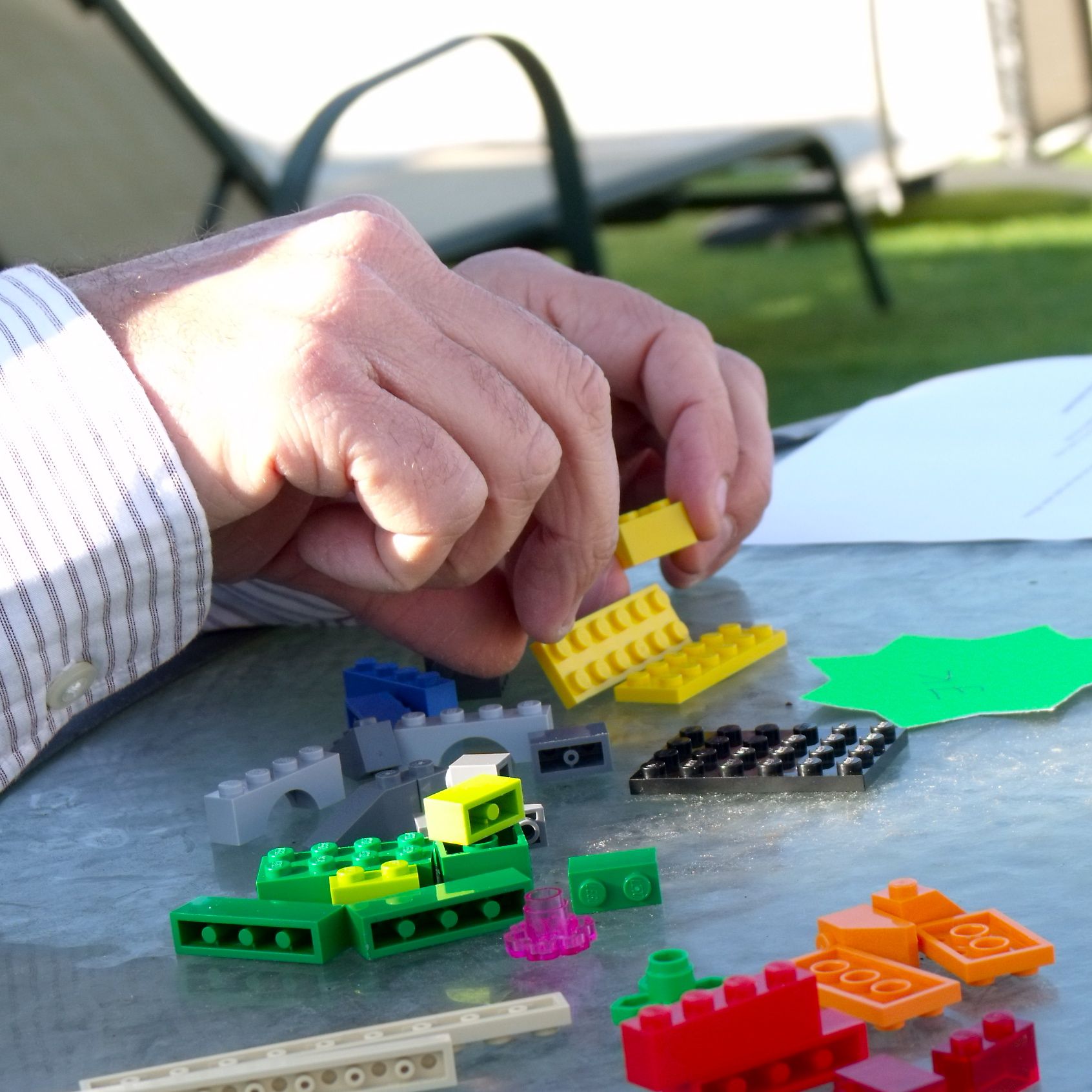
Aysar is a young volunteer at Dheisheh Refugee Camp. He was born and grown up there and he studied at Bethlehem University. While introducing himself, he says he believes in some crazy ideas, and I am curious to learn more about them. When I show him the bricks, he is surprised: ‘You remind me about Parmenides… – he says and soon after he admits – ‘I’ve never played with this game…’ I let him play around with the LEGO bricks and then get straight into the question: What is Palestine? ‘What it should be or what it is?’ he asks. I repeat my question, those simple 3 words: What is Palestine. I am not giving him any clue, I want to see what Palestine is for him. The less I say, the more he’ll tell me. He is puzzled, he starts talking but I stop him and ask him to build me his answer ‘We’ll talk after…’ I reassure him. He starts building – he takes the bricks on and off, smokes and builds. After a while he is finished: he spreads all the left bricks around the model ‘Leave them’ he says ‘They are part of it’. ‘So this is Palestine… tell me something about your model’ I ask him. [Read more]

January 12, 2012

The unbearable lightness of bricks: the Israeli hazard

JK building his model

JK building his model

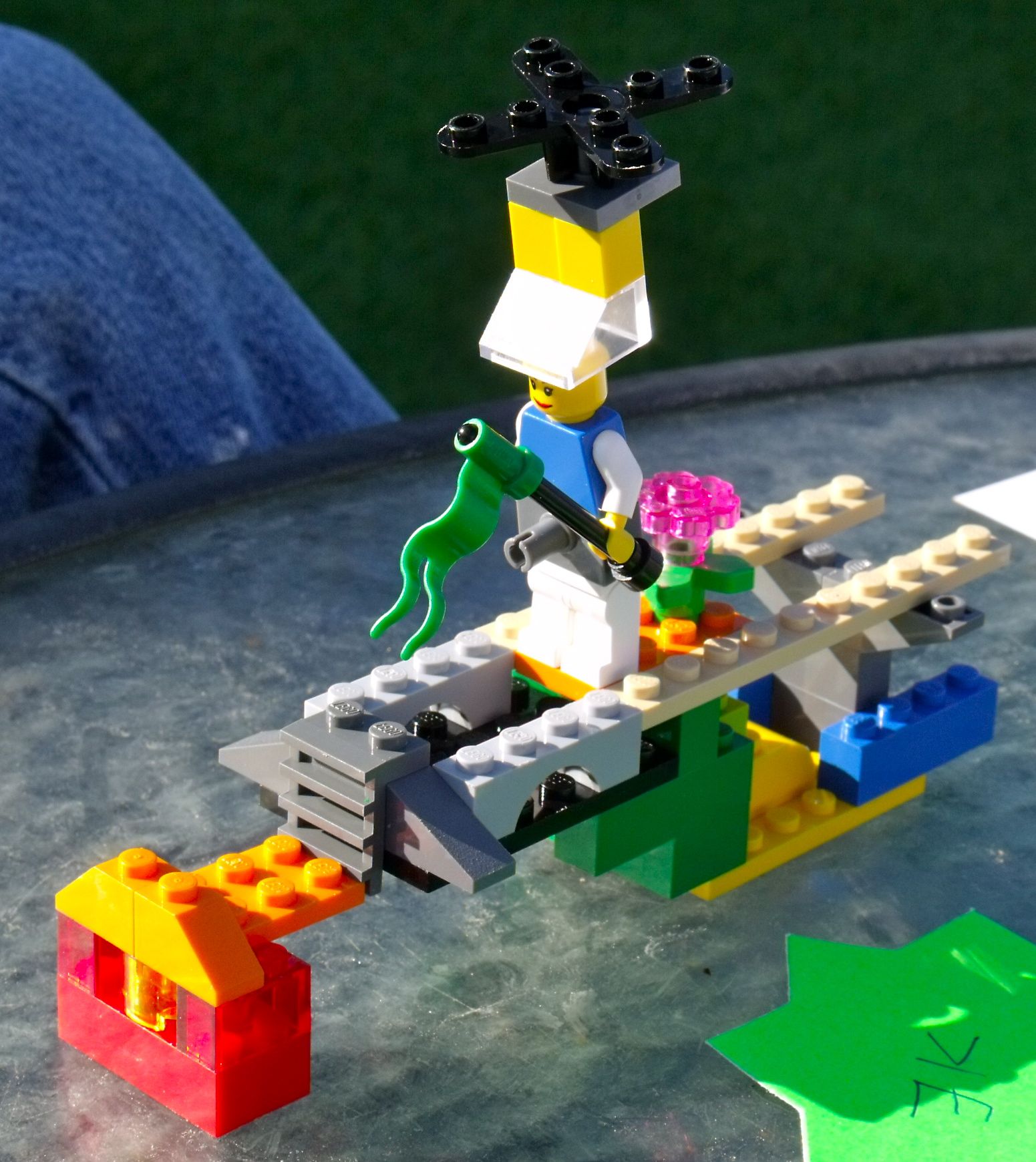
JK is an experienced business consultant from Israel. He is curious about this LegoView thing. I don’t waste too much time and get straight into the issue. What is Israel? – I ask him. He looks at me and at the bricks. ‘The question is tough!’ he says still puzzled, trying to make his mind while starting building his model.

JK's model of Israel

JK's model of Israel

“Israel, as you can see, has a lots of parts within it… We have the sea, which is the blue part, we have the desert, which is the yellow, and we have the green, which is the forest and the wildlife and a flower here, and the orange is some colourful nature parts. We have our urban landscape and houses, which are the grey and the black bricks. You see – he shows me immediately – the structure is not very stable… it’s linked to some hazardous parts, which is the orange and the red… – he says pointing me out the little red and orange structure which lies next to the end of his model: it’s attached yet separate.‘So what is that?’ I ask him. ‘This is the hazard part of our life – he says – and it’s a substantial part of our life because you see that if you move it, the whole structure falls… So. it’s linked to us, maybe it’s even holding us, but if you move it, there’s the risk that the whole structure would bend, maybe not collapse, but bend. And there’s a ladder – he says pointing at the grey brick – we have to consider to use it or not to use to actually connect these risks.’
[Read More]

January 5, 2012

Israel and Palestine through the Looking-Bricks

My travelmates

My travelmates

I’ve spent 10 days traveling around Israel and Palestine. It was just me and my LEGO bricks, a pretty good company. I have met a lot of people, have talked to anyone, have tried to understand their world and the complex reality they live in.

I went there because I wanted to understand what the whole Israeli and Palestinian conflict was about: media all over the world constantly tell stories about what is going on, there are thousands of publications of all sorts and all parts. I was not able to make my mind, I wanted to explore such a complex reality and see what all that was about. And I wanted to do it my way, pushing the bricks further, trying to explore the reality Israeli and Palestinians experience every day. I was not interested in political talks or in the usual rhetoric speeches, I wanted to see the world these people experience with their eyes. I had no bias, since I could not embrace either of the extreme positions I had been reading about, and LEGO were a perfect mean – they offered me a method where my question could be neutral and unbiased, so that all the relevant issues would emerge spontaneously from the models interviewees would build.
[Read More]