The Video is cilp taken from one of the LEGO SERIOUS PLAY workshop I run at the University of Ferrara, Faculty of Architecture in November 2012.
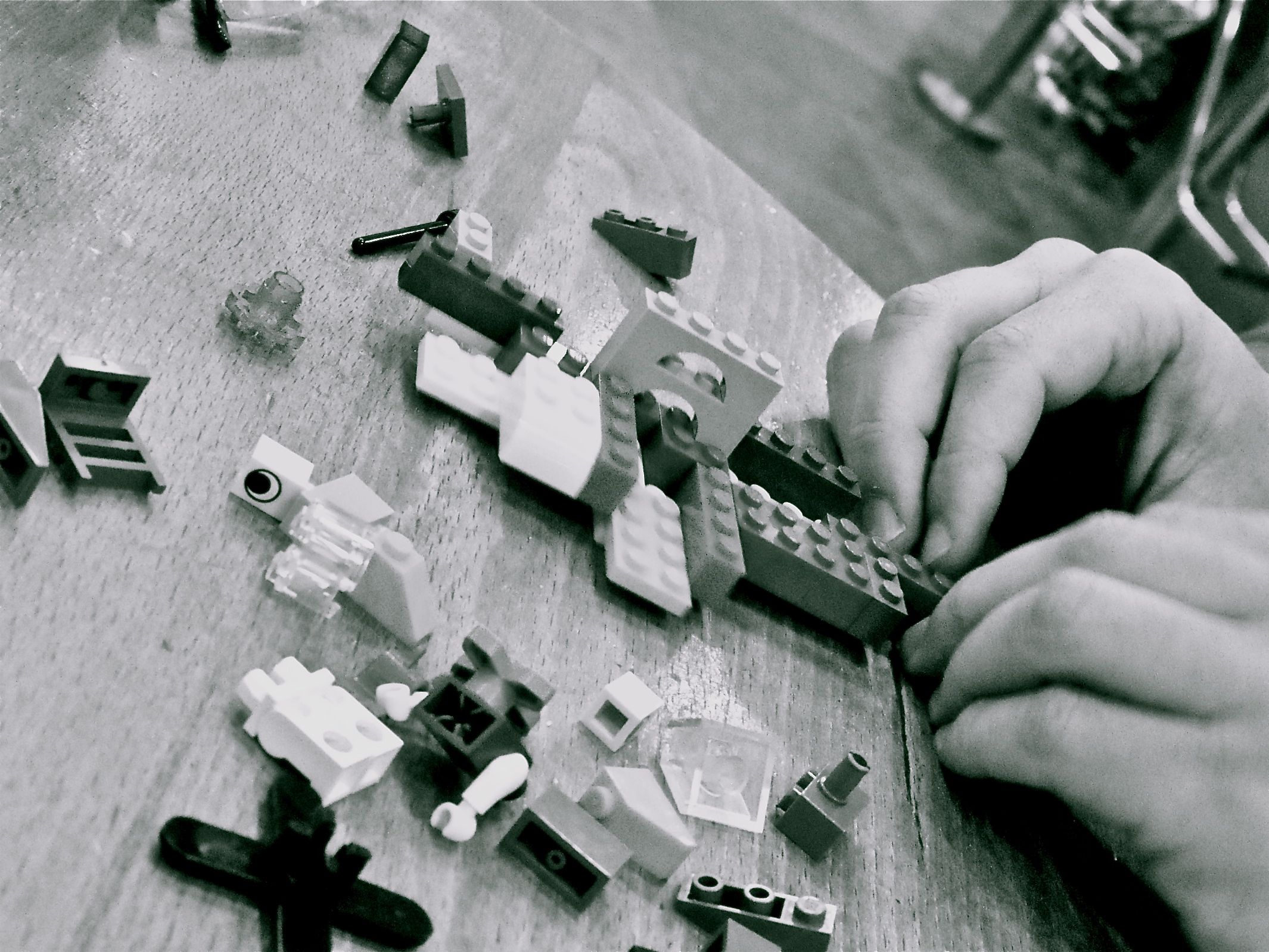
Students taking part to the workshop are currently working on a course project on Heritage; their main focus is Ahmedabad Heritage Walk (India). The aim of the workshop was to create a team out of the group of individuals working together and to lay the foundations for their collective work. To achieve this students engaged in a classic LSP workshop: they were first asked to define what Heritage is by building an individual LEGO model of their personal concept. Each student built their own vision and shared it with others. Sharing individual models and ideas let differences emerge: it came out that though they were all working and researching around the same topic, their individual perceptions, their focus, their ideas were very different: some students focused on the time dimension, others have seen heritage as coming from a relationship between present and past, others have highlighted the confusion and chaotic dimension related to the idea of Heritage, and others focused on the subjects who perceive, define and socially construct the concept of Heritage.
Villa Savoye, Le Corbusier LEGO Architecture model
LEGO bricks to discover more about architecture and about architects’ mind and perception of reality. [Paesaggio Urbano 5-6/2012]
The relation between LEGO and Architecture is a longstanding one: as a response to the increasing attention to modern architecture in early 1960s, LEGO developed Scale LEGO with the ambition that architects and engineers would attempt scaling their models using LEGO.
But the relationship between Architecture and LEGO can go far beyond this historical link created by LEGO itself and it comes from a creative approach based on constructionist theories which have been developed in the 60s by Seymur Papert. Papert was among the first ones to adopt LEGO bricks as a learning tool in education and he capitalised on the strict relationship between hands and brain: it is well-know that hands are connected to between 70-80% of our brain cells, which means that through the exploitation of this neural connection people can learn and think more and in more creative ways by connecting their hands with their brain and by constructing something material. This is the assumption which lead in late ‘90s to the development of LEGO SERIOUS PLAY [LSP] a method used in organisations to help people to think, share ideas and creating teams, solve problems and define organisational strategies. This method was developed by Robert Rasmussen, at that time the director of product development for the educational market at LEGO and it was officially launched in January 2002. [Read more]
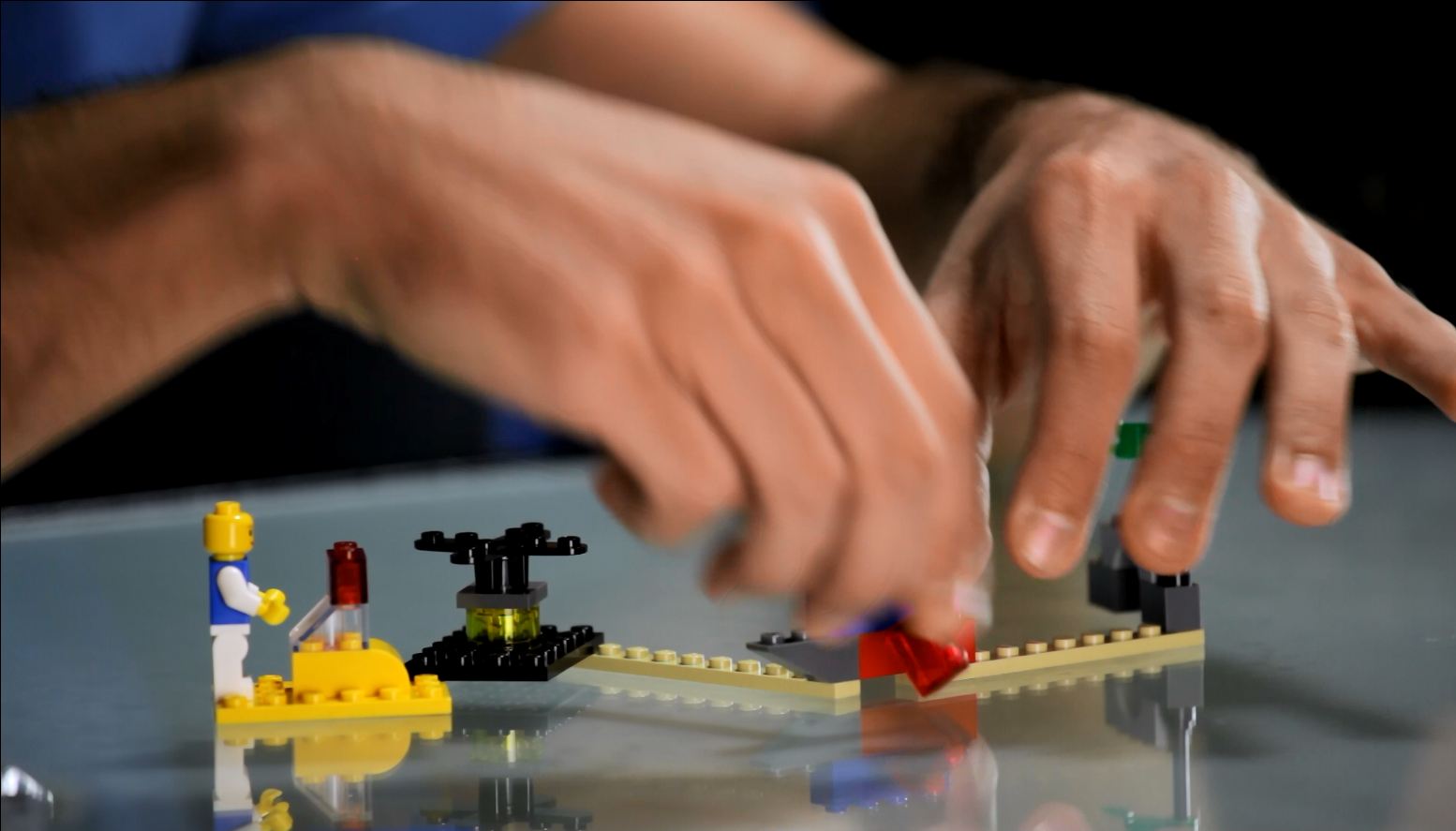
After the pic, here it is a fun clip of what happened during the LegoInterview with Francesca Valan.
It’s a short clip, just to make you feel the atmosphere and let you have a taste of the experience.
A bit thanks to Pietro for the amazing editing!
[I apologise, the video is available only in Italian now – the whole LegoView will be available shortly, with English Subtitles].
Picture taken at University of Ferrara during the LegoView with Francesca Valan, colour designer.
Not a colour designer, but THE colour designer who worked for LEGO. Could I find a better match and a more creative and bubbling person to talk about colours and architecture?
A big thank you to Francesca and the guys, superb as ever. Video coming soon!
LWs is an unique investigative method and reading the outcomes of such a process is limiting and doesn’t give a detailed insight into the whole cognitive process.
This video shows you how a LegoView happen: it refers to Aysar’s interview which has already been transcribed and published and it was filmed and edited by Gaetano Veninata and Daniela Sala.
A big thank you to you guys, you have done an amazing work!
I was walking around Jerusalem’s bus station looking at the stalls and the shops when this young man stops me to show me his production. He is kind, he asks me where I am from, we start talking. ‘So, you are a designer, a creative person right?’ I ask him. He nods proudly. ‘Would you like to be part of an experiment with this…’ I ask him while showing him the LEGO bricks. He is puzzled and at the end he accepts.
We go to a cafe and I do not waste time: ‘What is Israel?’ He stares at me and at the bricks. ‘With this pieces it sounds hard…! Should it be the present or what…’. I insist not giving him any clue. ‘Show me what Israel is’. He starts talking, and I invite him not to talk, but to build. He is uncomfortable. He is out of his comfort zone. Shortly he says he is done.
“Creativity is thinking up new things. Innovation is doing new things” Theodore Levitt
The last months have been devoted to innovation. Time for creativity and innovation is necessarily made by questions looking for solutions and the apparent quietness of this space is filled by innovative actions taking place in unexpected places, with unimagined forms and surprising people.
LegoViews is a growing method, proving itself to be not only flexible, but integrated and integrable into different contexts with diverse aims.
The current experiment is taking place in Italy: regardless the economic situation, that country can still be a place open to real innovative approaches and able to recognise, capitalise and be enthusiast for new ideas.
And the Italian Academia can be a free environment where a real problem could turn into an amazing opportunity: just put together an innovative university department, like the Architecture department of University of Ferrara, a team coordinated by Prof. Marcello Balzani, a cutting-edge course lead by prof. Carlo Bughi and supervised by Prof. Beppe Dosi, and what you get is an explosive situation where ideas happen and changes take place. Continue reading →
Creative processes always require time and the more difficulties and challenges they face, the more the resulting projects are innovative and original.
I have found myself playing around with LSP (Oops, I did it again!) and LegoViews a lot and the newest projects will be shortly revealed. In the meantime, while I am allowed to disclose the very first new initiative I have been working on, I have opened a FaceBook LegoViews‘ page: feel free to join!
Recently I have been pointed out that I spell both LegoViews and Legoviews and actually, there’s a reason for this, which might be subtle, but it makes a lot of difference.
LegoViews [LWs] is the Method: LEGO are the tool used to extract Views, to delve into human perceptions and representations, to discover and to create new meanings. It’s a modern maieutic approach based on the constructionist theories, which has been developed from LEGO SERIOUS PLAY. It’s actually my main personal challenge and the result of three years of thinking, testing and learnig by doing.
LegoViews is more than a way to challenge traditional journalism: it’s an attempt to explore the world through other people’s perception of reality and their views of the world. It’s a way to build worlds with words through unusual and different cognitive mechanisms.
Adam Levick is the CIF Watch managing director since July 2010. He was born in Philadelphia (US) and moved to Israel in 2009. His blog is the story of his personal journey, and it’s through his blog and his work that I decided to contact him.
I meet Adam in a cafe in Jerusalem – he is finishing his work, while I sit down and take out the bricks. Although I have told him about my interviewing technique, he is a little surprised at the beginning but he accepts the challenge and I ask my apparently simple and only question: ‘What is Israel?‘
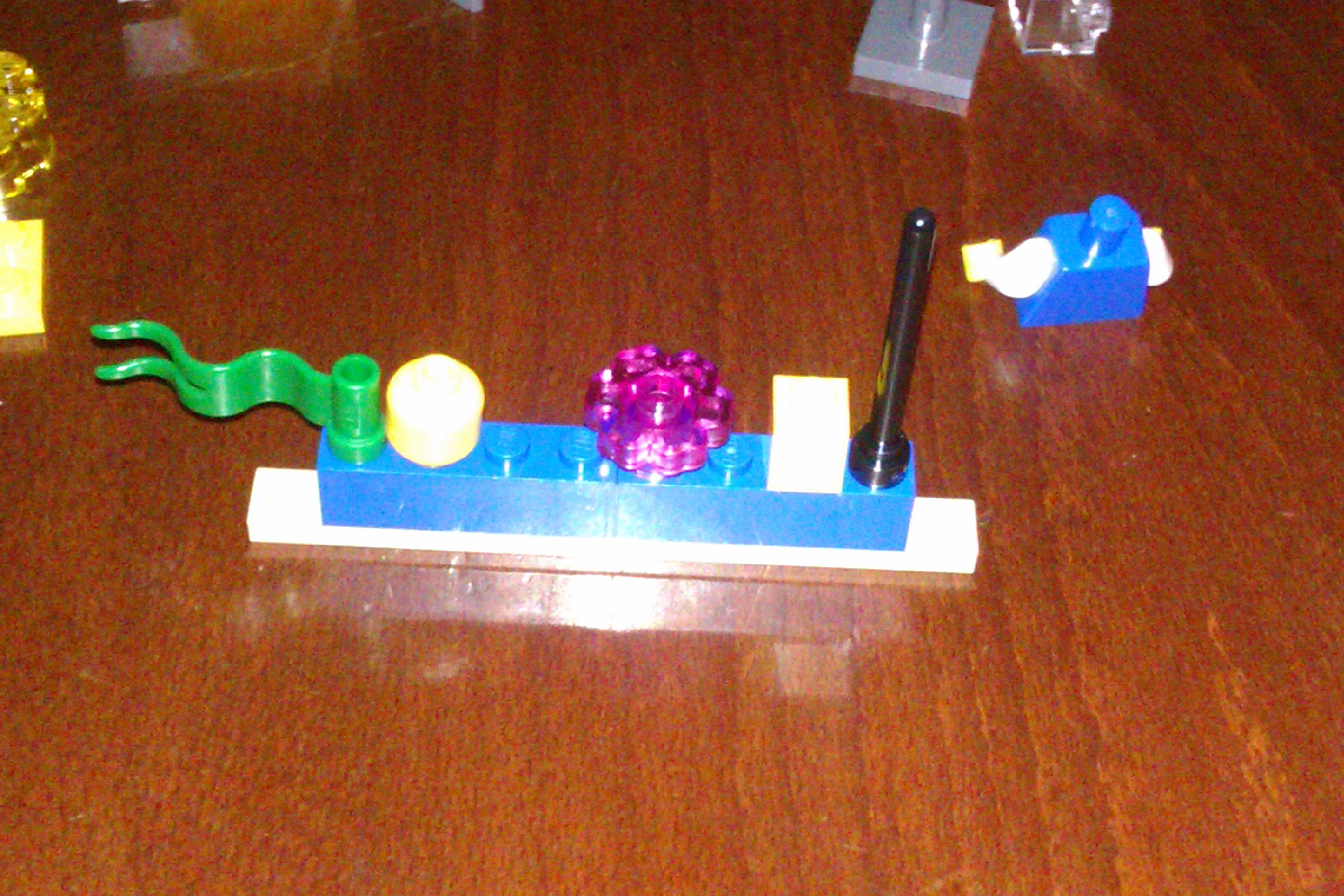
Adam’s model of Israel
‘…With These?’ he says looking at the bricks giggling and starting building. After a while he looks at the bricks ‘Mmmh… this is pretty good, I can explain it!’ he says almost surprised about his model.
This month the blog has been silent and quiet, but the there are many kind of silence – some can be more noisy than others. And this was a very noisy kind of silence.
LegoViews is a fast growing idea – this apparent silence has been filled with projects, people, interviews, tests and improvements for the next step. It won’t take me too long to reveal what is brewing. We are taking the bricks to the next level. What is certainly emerging in my experience is that LegoViews is an amazing method to reveal ideas because somehow those little bricks… Talk! Not only they talk, they also make people talking. For this reason, LegoViews is evolving in Talking Bricks. Stay tuned, more to come.
New original interviews with journalists, musicians, professionals, doctors and key figures are on their way, but in the meanwhile you can read the full interview with Mikado Warschawski, which has been published as an exclusive on the London Progressive Journal. The part published here is just the end of our talk, and Warschawski’s views about Palestine, his radical positions and the way he has been playing with LEGO are certainly of interest, both for the method and for the content.






 LegoViews