March 9, 2013

Francesca Valan, Industrial Designer
Francesca Valan is an industrial Designer. People call her colour designer, but she doesn’t agree – she doesn’t like the concept that colour is something to be added to an object, an artifact or a building. She works with colours, as one of the most recognised colour experts in the world: her job is to define, understand and give colors the right shape and form, changing the perspective that generally considers colour as something added to an object as a finishing touch.
When I met her, I immediately wanted to interview her, not only because she is responsible for the current shade of green of our LEGO bricks, but because I really had no idea of what colour was.
She accepted – being a curious and creative person, she couldn’t resist the idea to explore the subject she devoted her career to in a new way. When we sit down, she pretends to be comfortable – we’ve been talking a lot of my idea and knowing how things proceed, she was getting ready for the unexpected.
I put the bricks in front of her and simply ask her: What is colour?
She knows how the process works, and she builds.
Continue reading →
Posted in Architecture, Creativity Project, Legoview |
7 Comments »
March 2, 2013

How can we access Knowledge?
This question was triggered by Slobin’s book, Psycholinguistics, originally written in 1971 that I was reading in its second edition.
Slobin reflects on language and the role of psycholinguistics, and there he states that “language, like all systems of human knowledge, can only be inferred from careful study of overt behaviour. […] It is important to grasp the distinction between overt behaviour and underlying structure. In English and other languages, the distinction is expressed in the concepts of LANGUAGE and SPEECH: SPEECH has a corresponding verb form, whereas LANGUAGE does not.” (Slobin 1979 :2).
This distinction reminds Saussures’ Langue and Parole, when he says that language should be considered as the norm of all other manifestations of speech (1916 :9). Though Slobin, by pointing out the active nature of speech, that corresponds to a verb, to an action, has brought in something I have found worth a thought. So, what if we shift Slobin’s definitions and equal knowledge to language and speech to the act of meaning making?
Continue reading →
Posted in education, Epistemology, theory |
3 Comments »
February 23, 2013
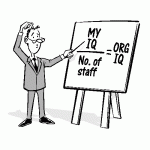
The simplest questions are the toughest to be faced. Methodologies like LEGO SERIOUS PLAY (LSP) are said and proved to have a huge effect on organisations. Right, organisations. But what are organisations? And how LSP can be beneficial?
It might sound a stupid question, though I think that there are no stupid questions just wrong assumptions. In order to better understand the context, I had a look to some classical authors in organisational theory. I’ve looked back at what literature says about organisations: literature is still a huge resource when it is part of a search for answers. I’ve started with classics, those authors that most managers today should be familiar with to better understand the context as it is.
Weick (1979) says that organisations are ‘identifiable social entity pursuing multiple objectives through the coordinated activities and relations among members and objects’ (:3) and later, in 1984, Daft & Weick write that organisations are ‘open systems that process information from the environment’ (:285) so that are seen as meaning systems (:293).
Scott (1987) focus on people when stating that “organisations are social structures created by individuals to support the collaborative pursuit of special goals” (:10).
Chia (2000 :514) says that organisations are social objects constituted by discourse.
The social nature of organisations seems clear: organisations are made by people.
Continue reading →
Posted in LEGO SERIOUS PLAY, Methodology, Organisations |
2 Comments »
February 17, 2013

“For this feeling of wonder shows that you are a philosopher, since wonder is the only beginning of philosophy.” [Plato, Theaetetus]
When we want to know something, what we do is to search for reliable sources of information, to look for people who spent their lives studying a subject, trying to give it a sense, trying to make the topic understandable and clear and adding their own insights by formulating some statements which should define – and sometimes confine – the realm of knowledge we can get.
When we search for information, the first thing we rely on is the literature on the topic: we delve into books and papers, read, listen and watch everything relevant. Like sponges, we absorb what the world have already said and thought about the subject at hand, we take one or two of those main concepts, adopt them and elaborate our personal and critical insights starting from there.
We might end becoming experts and authorities on that subject with people asking us to explain the mysteries we already faced in the early stages of our research.
We build our knowledge step by step, brick by brick, by collecting information and combining it in something that fits the existent knowledge and our experience.
Continue reading →
Posted in education, LEGO SERIOUS PLAY, Methodology |
2 Comments »
February 10, 2013
 Identities and roles, in any kind of organised society, are said to be socially constructed: they are based on the implicit rules of collective agreement and acceptance. This makes most of such roles static, repetitive and defined independently by the individuals.
These socially constructed role-based identities are entwined with a number of implied relations that determine the quality of the relationships and define a set of rules of conduct that are accepted and never put into discussion. Such a situation is symptomatic of a society based on the ‘myth’ of hierarchies, scared of failing, motionless.
While the economic situation in Europe sinks, this immobile situation, that would call for changes and creativity, rather than experimenting on innovation, allows the fear to fail to prevail on the risk to succeed.
Society and people prefer to play safe rather than to put themselves into play and rather than assuming the responsibility of a change and play with those rules, they follow and reiterate practices that, being static and mindlessly repeated, have lead to a stagnant situation. A change is needed: Innovation is claimed as the key solution. But Innovation is not a good, is the result of a creative and dynamic approach.
Creativity requires flexibility, action and courage to try something new and the the will to explore what ifs. Rather than playing safe, if the aim is to discover new opportunities, we need to play. Seriously.
Continue reading →
Posted in LEGO SERIOUS PLAY |
5 Comments »
February 2, 2013
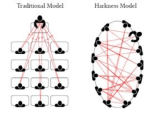
Harkness Table
I was reflecting on my experience with architecture students at University of Ferrara and LEGO SERIOUS PLAY. [See the video]
I find amazing how students who did not have any clue about the content and the goals of the workshop engaged in the discussion and raised a number of enlightening ideas about Heritage. They were not asked, neither provided, any books or papers to read, the idea was to understand how a bunch of students in their early-twenties could theorise and think about Heritage independently, critically and collectively.
So, in my research about educative approaches that capitalise on collaboration and collaborative meaning-making, I’ve found about the Harkness Table. For those who are not familiar with it, this is an educative approach introduced in 1931 when Edward Harkness, a philanthropist, challenged Exeter University asking them to innovate education and provided them with an oval table. The idea behind the table, which was meant to allow 12/15 students to sit around together with their teacher, was to create a different approach to education where students were seen as a team and could be encouraged to take part to a discussion, interact and learn about collaborative practices, by reducing the influence of the teacher.
The idea of a class as a team that capitalises on teamwork and encourages interaction among students in a free environment sounded a pretty close approach to that I adopted. The Harkness Table focuses a lot on these concepts, and I’ve found it thrilling. Though the more I read about it, the more the differences emerged.
Continue reading →
Posted in education, LEGO SERIOUS PLAY, Methodology |
5 Comments »
January 31, 2013
It all started as a funny game: let’s play with a funny animal made with LEGO and let’s use our imagination…
This slideshow requires JavaScript.
Which is your favourite Penguin? 🙂
Posted in Events & Fun |
2 Comments »
January 21, 2013
Why did I ever get so much into the bricks?
I used to play with LEGO when I was a child, like most children of my generation: my father dreamt of having an Architect daughter one day. He’d never imagined that instead of becoming an Architect and follow his dreams, I’d have kept playing with the bricks my way.
After 4 years of experiments, study and research – mostly done almost hidden in my room on my own – I have just came out and simply have found out that there was another way to delve into the power of LEGO, not as a mere playing toy, but as powerful tool to be used to find out more about ourselves, both as individuals – like the bricks’ based interviews – and as part of larger, mutually related and dependent organism, with LSP.
The way we talk and think, how we conceptualise the world and the words we use to picture our world, are just bricks of our minds, where material bricks come as a precious aid to better connect our inner thoughts.
Continue reading →
Posted in Methodology |
1 Comment »
January 18, 2013
You can learn more about a man in one hour of play than in a year of conversation [Plato]
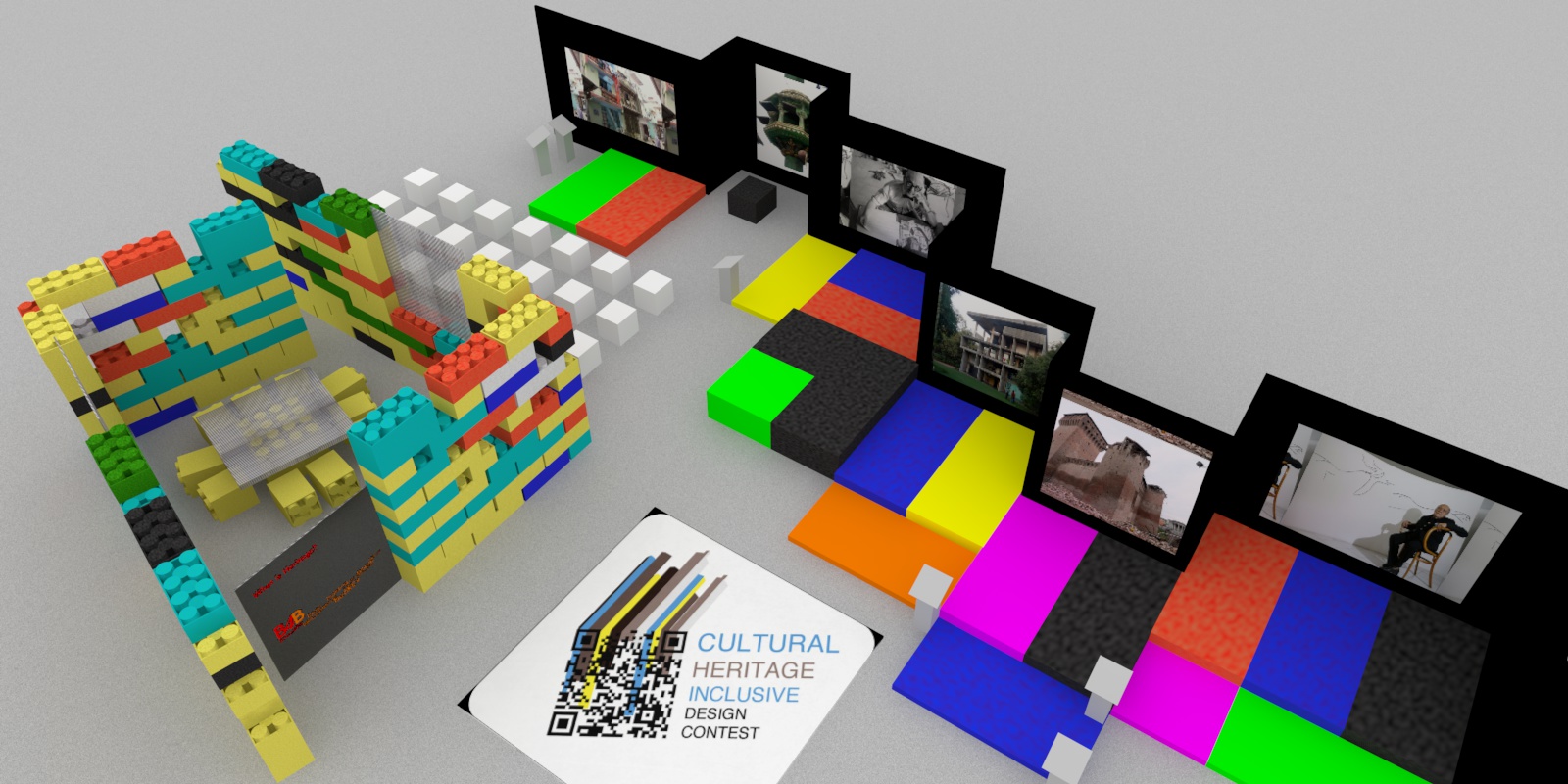
At Restauro 2013, the trade fair for the Art of Restoration and Conservation of our Cultural and Environmental Heritage, the first and most important Italian event dedicated to the art of restoration and the conservation of Italian artistic heritage taking place in Ferrara (Italy), we are going to play. Because a Serious Play can improve our understandings and reveal brand new dimensions of Heritage.
The Department of Architecture at University of Ferrara, together with Tekehub, and with the High Tecnology Network of Emilia Romagna, is working on an experimental exhibition stand to be presented at the Restauro 2013 in Ferrara: a new format and new contents will wait for visitors attending the event on March 20-23rd 2013. The leading idea is to explore concepts related to

Restauro: the LEGO-Box and the project of the stand
Heritage using innovative means based on methodologies that enhance knowledge sharing and meaning making.
For four days, in a multi-functional and colourful space, designed to explicitly recall LEGO bricks, using LEGO SERIOUS PLAY, participants will be involved in a number of events, speeches and thought provoking activities to encourage the discussion and improve our understand of what is Heritage. The project is called B4 – which plays on the idea of Bricks for… and the assonance with the world Before. Continue reading →
Posted in Architecture, Events & Fun, LEGO SERIOUS PLAY |
2 Comments »
January 7, 2013
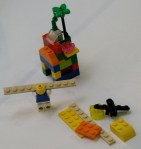
Lego Interviews produce new ideas
LEGO-interviews are an innovative investigative method to delve into reality developed by Patrizia Bertini starting from the basic theoretical principles of constructionism and from a deep knowledge and experience with underlying LEGO® SERIOUS PLAY® (LSP).
This interviewing method has been developed to challenge traditional journalism, as an attempt to explore the world through other people’s perception of reality and their views.
Journalistic interviews are generally based on well defined dynamics, on journalists’ capacity and on a constant tension between the interviewer and the interviewees. There is a large literature about this and there are experts who specifically train politicians and influent public people on how to handle and conduct interviews in order to dominate the conversation and to provide a good and safe image of themselves. And there are also a number of books and essays that teach journalists how to make effective interviwes. Everything is codified, recognisable and known.
LEGO-interviews’ challenge is that of radically changing the psychological and relational dynamics between the journalist and the interviewee so that the cognitive processes underlying the interaction are completely different: the interviewer and the interviewee are not anymore opponents but they collaborate, they literally construct the interview together with an original process that produces unexpected contents which most the time surprise the interviewees too.
Continue reading →
Posted in Journalism, Methodology |
7 Comments »








 LegoViews