May 10, 2013
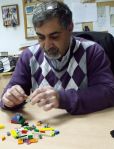
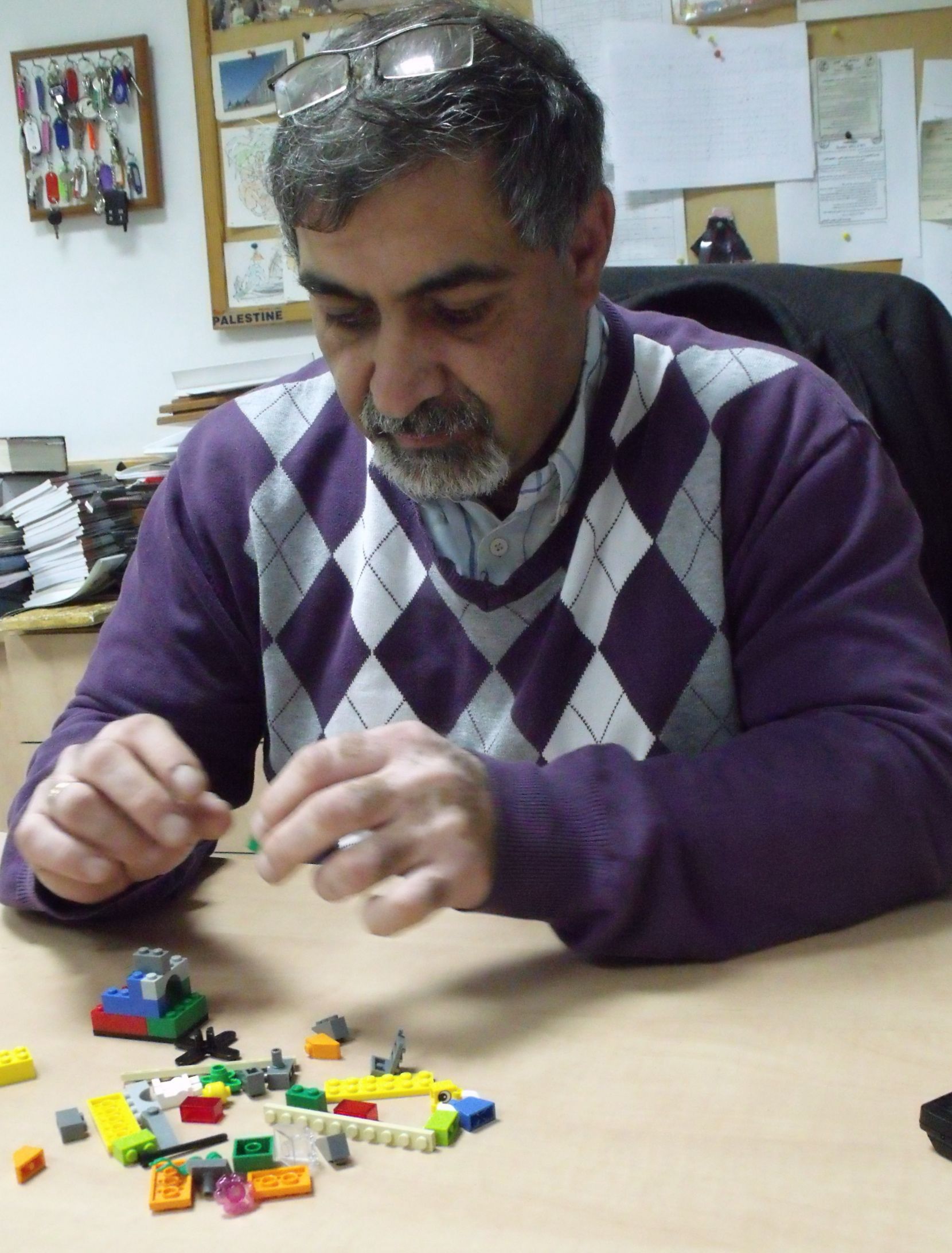
Dr Rauf Azar – Beit Sahour medical centre’s Director
I have met Dr Rauf Azar at Beit Sahour medical centre. He is the director of the clinic since 2005. The clinic is part of the Health Work Committees in Palestine, a no profit NGO which main goal is to provide health services to the inhabitants of occupied Palestinian territories, with a special focus on patients from marginalised groups, like poor people, women, children and people with special needs. ‘This centre was founded as a clinic’ Dr Azar says, ‘then it expended and became a day care surgery centre and we are on our way to establish here a small hospital for general and reconstructive surgery’. The reconstructive surgery will be the first hospital dealing with reconstruction and it will be the first one in the Palestinian territories and it will be developed in partnership together with the Department of Plastic and Reconstructive surgery in Bari (Italy) and with prof. Michele Pascone.
Then I go straight to the point, and ask Dr Azar What is Palestine?
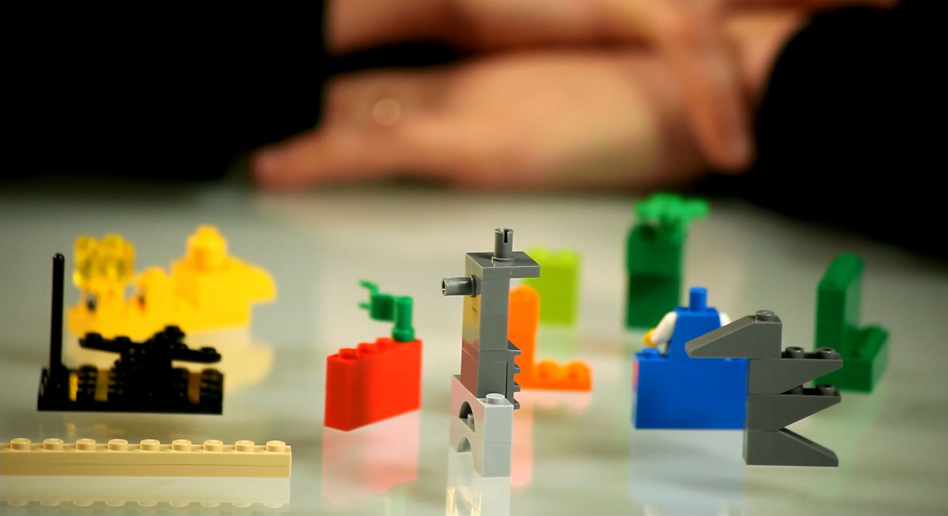
He does not say a word for a while. Then he looks at the bricks and without even touching them, he firmly says ‘Palestine is nothing here…’.
Continue reading →
Posted in Activism, Israel and Palestine, Journalism |
3 Comments »
May 3, 2013
Francesca Valan – Industrial Designer and Colour expert
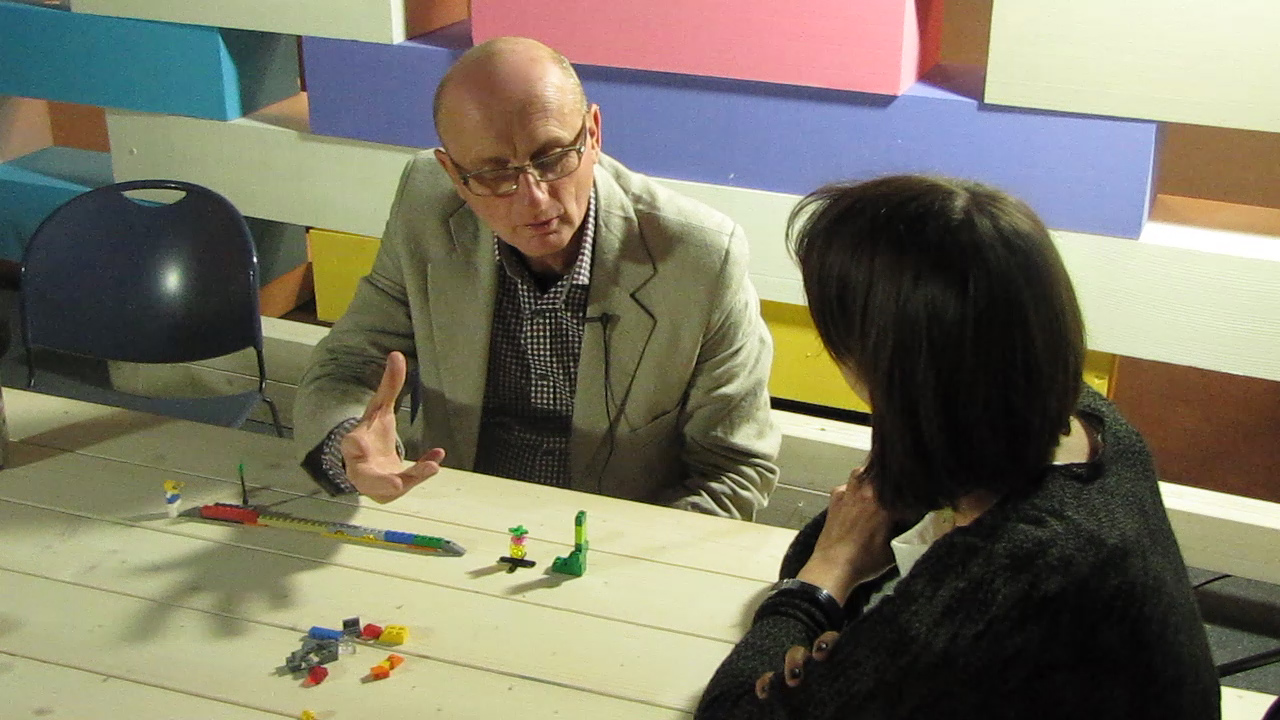
Francesca Valan, an Italian industrial designer, is internationally considered one of the most passionate and experienced colour experts. One of the key problems, when it comes to colour and architecture, is that colour is something that architects add at the end of the design. She strongly disagrees on such an approach and after telling us, with the bricks, of course, what is colour, I asked her about Architecture. What is Architecture?
She stares at the bricks for a while and then she starts building. When she has finished, she looks at me

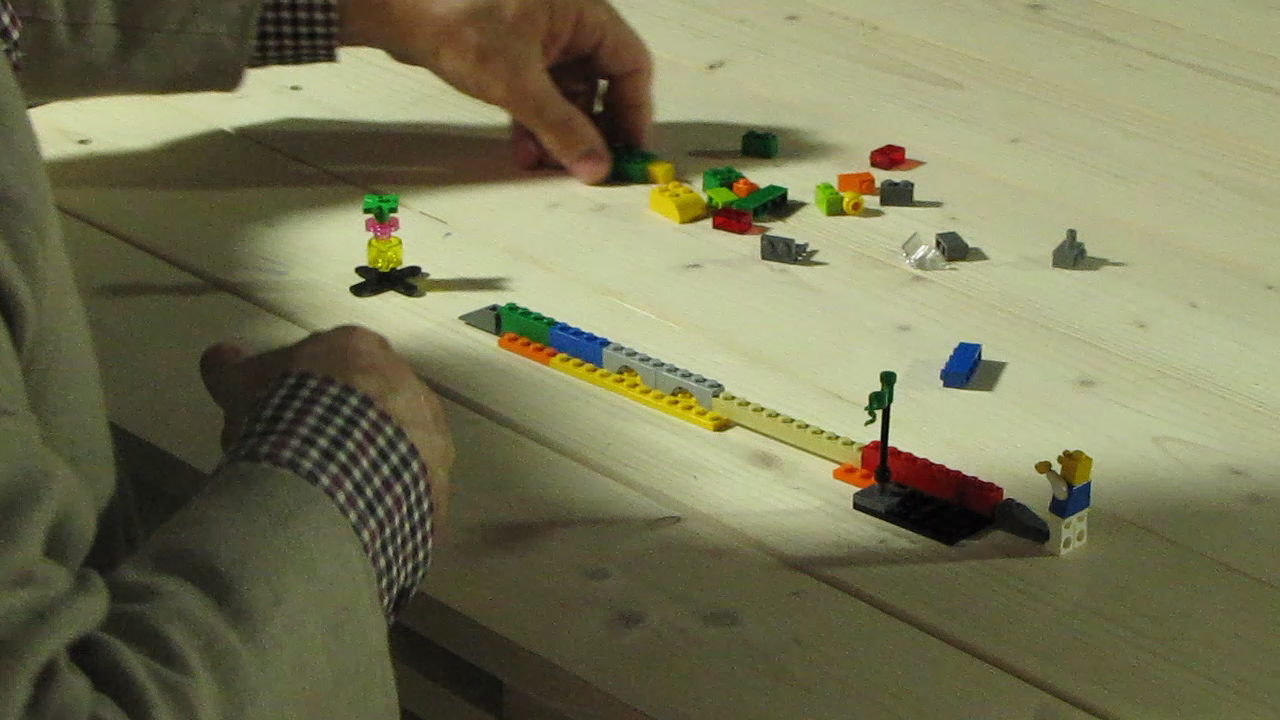
F. Valan – Model 1 ~ Architecture
and at the bricks and recalling the question – what is Architecture? – she simply says: ‘Rules. Geometric rules. Axes. Vertical and horizontal axes. But the main thing, it’s depletion of chromatic and material elements in favour of formal elements.’
I look at her model: it’s an interesting one, as there are a number of elements and they are all detached. ‘What are these elements you have built here?’ I ask her.
‘Volumes. These are volumes and not architecture. The yellow one, for instance, it’s a solid build following formal criteria I do not know, with improper chromatic criterion. Because colour in architecture is always impoverished. It’s kind of too obvious, if there’s any logic, this is a trivialising one.’
Continue reading →
Posted in Architecture, Journalism, Legoview |
Leave a Comment »
April 26, 2013
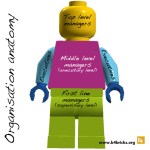
Organisations as organisms
A large extend of organisational theory considered organisations from a mechanistic and traditional view. However, organisations can be seen much more like living biological organism. The etymology of the two words, organisations and organisms suggests that the two terms share something much more significant that needs to be considered and looked at: they both share their greek origin, ὄργανον – organon, “instrument, implement, tool, organ of sense or apprehension” but the word has been traced to descend by the Proto-Indo-European *werǵ- (“work, to make”).
The history of the term well reflects the shift from the original biological meaning to the much more social nature of contemporary meaning: organisation, according to the English Oxford Dictionary, appeared in 14th century in French from Latin and originally it referred to anything related to a living being. Organisation referred to the development or coordination of parts in order to carry out vital functions. From its first appearance in 1425 when the Grand Chirurgie was published and recorded the term until late 18th century, the term organisation had a specific biologic connotation. But at the end of the 18th century a new meaning come to use, and organisation started referring to “the condition of being organised; systematic ordering or arrangement; specifically the way in which particular activities or institutions are organised.” In 1790 E. Burke wrote the Reflections on the Revolution in France where he explicitly stated that society was supposed to be managed as a living organism. This passage is considered as the first evidence of the shift from the biological into the sociological realm of the term organisation. Continue reading →
Posted in LEGO SERIOUS PLAY, Organisations |
2 Comments »
April 19, 2013

Ciro Pirondi talks about Heritage using the bricks
This LegoView was recorded during Restauro 2013, the main event focusing on restoration, so the question was almost due. What does a well known Architect as Ciro Pirondi, director of the Escola da Cidade in São Paulo (Brazil), think about Heritage? The question, as ever, needs to be answered my way, with the bricks. I ask the question to Mr. Pirondi, put the bricks in front of him and let him to play, allowing ideas to connect and to construct a new vision. While he builds, he sings Agua de Marcio ‘It’s a Brazilian very popular song…’ he says smiling, while he builds and enjoys the process. [Watch the Video]
When he is done, I ask him to tell me something about his model, about Heritage.
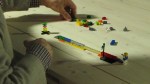
Heritage and Nature as built by Arch. Ciro Pirondi
‘This is an allegory representing a bridge where men should find their balance and seek for a balance with nature… this green’ – he says showing me the green bricks – ‘represents nature’.
And then he goes on ‘I think this is a need for the 21st century’s cities… They need to find a bridge that can bring back the balance between mankind and natural nature…. ‘
The bricks and shapes are detached in his model, the human figure is not connected to any part of the model and I ask him why is that.
Continue reading →
Posted in Architecture, Journalism, Legoview, Video |
1 Comment »
April 12, 2013
![Hands on! LSP Faciitators in an LSP workshop! [Photo by Lucio Margulis]](https://legoviews.com/wp-content/uploads/2013/04/564754_10151530155917398_565878055_n.jpg?w=150&h=112 "Hands on! LSP Faciitators in an LSP workshop! [Photo by Lucio Margulis]")
Hands on! LSP Facilitators in an LSP workshop! [Photo by Lucio Margulis]
Every year, when April comes, LSP facilitators know that a great inspiring event is in the air. It’s the annual LEGO SERIOUS PLAY facilitators’ meeting, the most exciting event for those who practice and experience the power of LEGO bricks as a Facilitation tool. Every year an increasing number of facilitators gather in Billund, Denmark, the place where LEGO was born in 1934.
LSP is a tool which has been developed at the end of the ’90s at IMD in Switzerland based on the studies of Johan Roos and Bart Victor who introduced the “serious play” concept and process as a way to enable managers to describe, create and challenge the views of their business. The Serious Play approach was then further developed and brought into LEGO SERIOUS PLAY by Robert Rasmussen, who worked at LEGO at that time, and who is the main architect of the LSP methodology and one of the most inspiring and LSP enthusiast.
Continue reading →
Posted in Events & Fun, Journalism, LEGO SERIOUS PLAY, Legoview |
2 Comments »
April 6, 2013
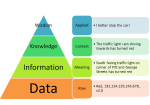
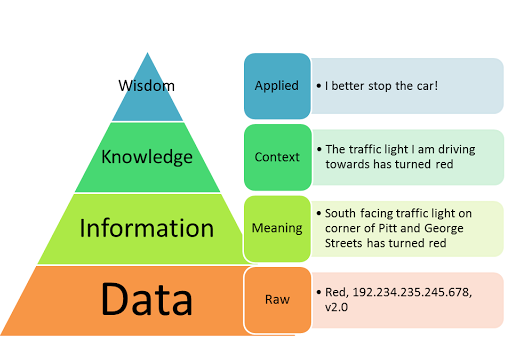
DIKW Pyramid (Ackoff)
The importance of organisations’ relationship capital lies in the quality of the relations established by the members of an organisation, and in organisations’ capacity to turn a group of individuals into a functional team.
Such a
social and relational capital can be the driver for the creation of organisational
wisdom . Organisations have long focused on the skill base and on the accumulation of internal
know-hows, improving and encouraging people to increase their
knowledge base, as if by increasing the individuals knowledge could spontaneously have a massive impact on the whole organisation. An increase in the know-how is essential for an organisation, however, for such a know-how to become an organisational asset, rather than to remain an individual (
human resource related) skill, more efforts are needed.
If the relational capital is not adequate and constructive, knowledge of an individual remains an individual personal asset rather than becoming part of a collective and organisational environment.
To capitalise on the learning practices that have pervaded organisations in the past decade, knowledge needs to be put into action.
Know-hows need to turn into
know-whys.
Continue reading →
Posted in LEGO SERIOUS PLAY, Organisations |
8 Comments »
March 29, 2013
Ciro Pirondi came to Ferrara, in Italy, to present an exhibition dedicated to Niemeyer at Restauro 2013 and here it is, where we met.
I ask him to introduce himself. He looks at me and smiles gently – ‘I am an architect’ – he says humbly – ‘and I am emotional to be here, as this is where my father comes from… from Emilia…’
He is a kind man, very gentle. I explain him about the interviewing process, he smiles curious and when I ask him, he just plays with the bricks.
I ask him about Niemeyer. He looks at his model for a while, and makes some adjustments.
‘To talk about Niemeyer, I need a tower with curves… lots of curves, as Niemeyer loved curves…something like this!’ he says showing me the model.
‘Niemeyer used to say that he loved curves a lot, because curves reflect Einstain’s universe, they reflect the loved woman, and they remind Rio de Janeiro’s mountains… And he really loved curves. ‘ And by keeping the model in his hands and looking at it, he goes on.
Posted in Architecture, Journalism, Legoview, Video |
1 Comment »
March 27, 2013
For those who were not there and for those who want to keep reflecting on the contents presented on Saturday 23rd March in Ferrara [Italy], here are the Keynote speakers’ presentation. A big thank you to all the speakers who agreed to share their precious and inspiring material!
Robert Rasmussen, Rasmussen Consulting (Denmark) | The LEGO SERIOUS PLAY method: a thinking, communication and problem solving techniques for groups insights to its the origin, purpose, functionality and theoretical underpinnings.
This slideshow requires JavaScript.
Continue reading →
Posted in Architecture, education, Events & Fun, LEGO SERIOUS PLAY, theory |
1 Comment »
March 25, 2013
On March 23rd, at Restauro, LEGO SERIOUS PLAY had been the main player.
In times where playing safe is not possible anymore, we need to play seriously and through the inspiring talks of our keynote speakers, participants to the event have been taken to a new dimension, where LEGO are a tools to build the intangible world of ideas, where imagination becomes a key asset to rethink organisation,where architects find new ways to design the space and the experiences, where students become learners and people can build their requirements and needs to help organisations’ to properly develop their products.
It has been a fascinating journey, where speakers engaged with the bricks, with themselves and the audience trying to provide a rather unique picture of the endless potential hidden in those little bricks.
Proceedings, videos and more pics will follow, here you are the very first ones!
Again, Thanks all – to the inspiring and amazing speakers, and to the people who joined!
Continue reading →
Posted in Architecture, Events & Fun |
Leave a Comment »
March 17, 2013
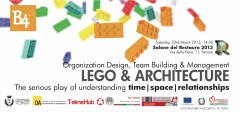
Everything is almost ready: the conference programme , the keynote speakers, the logistics for free tickets, the stand and the invitations.
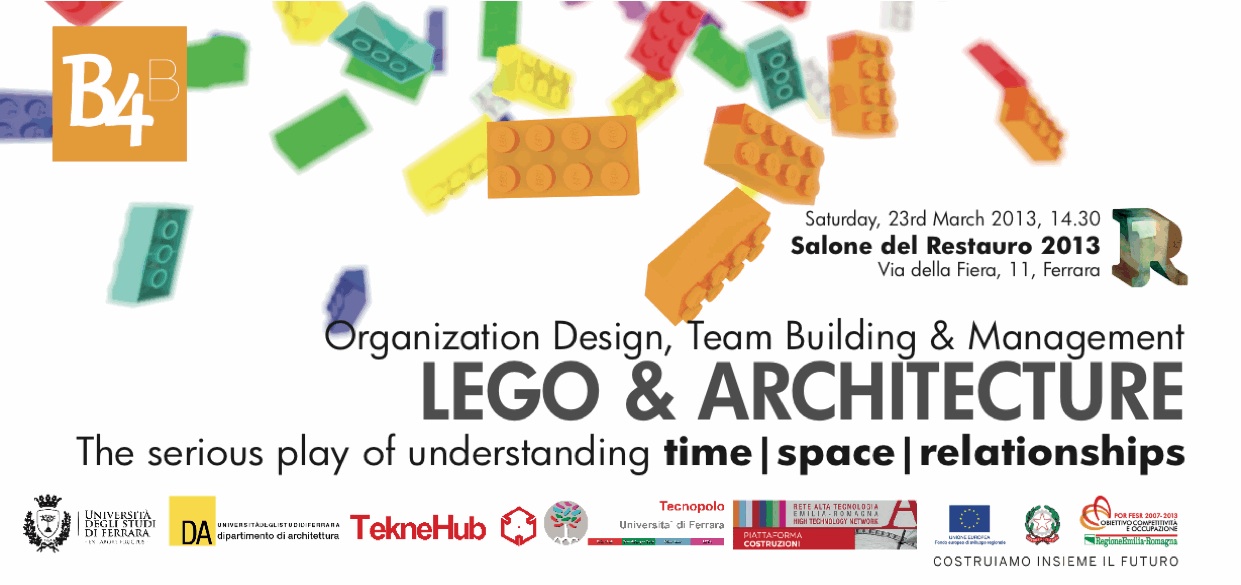
At Restauro 2013, Ferrara Via della Fiera 11, LEGO SERIOUS PLAY, creativity, heritage, inclusive design and Architecture will mingle in an unique and exciting combination. LSP workshops with students an stakeholder will inspire, and a conference with the key players in the LSP domain is an unique opportunity to learn about the method and the experiences that proved how thinking with hands can enhance our creativity and lead to innovation and results.
Events are free. Join Us!
– Lego Architecture – the exhibition
– Screening of videos and presentations about the LEGO SERIOUS PLAY Method:
* LEGO Serious Play + LTU City Tools – Guadalajara Jalisco (Mexico). Luis Alberto Aguirre Gómez [Founder of La Consultoría: E + I] & Juan Ponce Briseño [Architect at Urban Think Tank] ~ building a startup -an urban information system- with LEGO Serious Play.
Continue reading →
Posted in Architecture, Events & Fun, LEGO SERIOUS PLAY |
Leave a Comment »





![Hands on! LSP Faciitators in an LSP workshop! [Photo by Lucio Margulis]](https://legoviews.com/wp-content/uploads/2013/04/564754_10151530155917398_565878055_n.jpg "Hands on! LSP Faciitators in an LSP workshop! [Photo by Lucio Margulis]")





 LegoViews